
"Coffea liberica"
300 article(s) found

Practical information | Coffee genealogy collation
Coffea / Coffee consists of more than 120 species, usually opposite leaves, evergreen shrubs or small trees with horizontal branches. Contains opposite species, one side is flat, and the other side has grooves (right! It's coffee beans! ). Tropical forests are the preferred habitat for most coffee plants. There are about 60 coffee plants in the world.

Varieties of coffee raw beans Coffee is one of the three major drinks in the world
Coffee is the first tropical cash crop in terms of output, consumption and economic value among the three major beverages in the world. it is the second raw material after international trade relay oil, and it is also one of the largest tropical food raw materials in the world. The coffee variety garden covers an area of 3 mu, which mainly lies in the collection and preservation of coffee variety resources. the varieties are carried out on the basis of the observation of its botanical and biological characteristics.
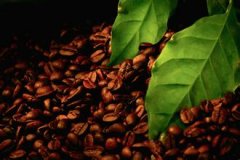
Coffee beans have the same characteristics as those of coffee beans.
1. The seed coat of small fruit coffee has been removed, oval or oval in shape, 8-10mm in length, 5-7mm in diameter, 3-4mm in thickness in the middle, raised on the back, flat on the ventral surface, with slightly curved longitudinal groove and paper seed coat marks. Raw products are yellow or dark green; baked products are dark brown with special aroma and slightly bitter taste. Astringent. Coffee flower 2. Coffee seeds are slightly larger, ovoid, 9-11mm long and 7-7-in diameter.
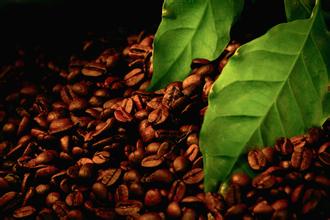
Coffee beans have the same characteristics as those of coffee beans.
1. The seed coat of small fruit coffee has been removed, oval or oval in shape, 8-10mm in length, 5-7mm in diameter, 3-4mm in thickness in the middle, raised on the back, flat on the ventral surface, with slightly curved longitudinal groove and paper seed coat marks. Raw products are yellow or dark green; baked products are dark brown with special aroma and slightly bitter taste. Astringent. Coffee flower 2. Coffee seeds are slightly larger, ovoid, 9-11mm long and 7-7-in diameter.

What is the treatment of Kenyan coffee beans growing at an altitude of 1500 mi 2100 meters?
It was not until around the 11th century that people began to use boiled coffee as a drink. In the 13th century, Ethiopian troops invaded Yemen and brought coffee to the Arab world. Because alcohol was strictly prohibited in the Muslim world, coffee became a very important social drink at that time. The word coffee Coffee comes from the Arabic Qahwa, meaning plant drink, which later spread to Turkey and became

On the Origin, Culture and Communication of the History of Coffee
Coffee tree, is a tropical plant, is an evergreen shrub, growing in the equator, latitude 25 degrees north and south, that is, within the Tropic of Cancer. The Tropic of Cancer and near the equator are the world coffee growing belts. The growth conditions require abundant rainfall and humid climate. The suitable altitude is about 600 to 1500 meters, and the annual rainfall is 1500 to 2000 millimeters. Mild days alternate with cool nights.
Boutique Coffee Science explains in detail the knowledge about coffee trees
Coffee trees are evergreen shrubs or trees belonging to the Rubiaceae family. Wild coffee trees can grow to a height of 5 to 10 meters, but coffee trees planted in the manor are often cut to a height of less than 2 meters in order to increase fruit and facilitate harvesting. The opposite leaf of the coffee tree is long oval, the leaf surface is smooth, the end branch is very long, the branch is few, and the flower is white, opening at the base of the petiole connecting the branch.

Why Bourbon Coffee is famous-the Legend of UCC Coffee and Sharp Bourbon Bourbon Pointu
Professional coffee knowledge exchange more coffee bean information please follow the coffee workshop (Wechat official account cafe_style) the coffee we usually drink, whether from the Arabica species (Coffea arabica), Robusta (Coffea robusta), or the rarer Liberia (Coffea liberica), in botany, all belong to the Rubiaceae, coffee genus. Coffee genus

Liberian Caffeine Content-Caffeine Content of One Cup of Coffee
Coffea arabica beans are flat, elongated, oval in shape, with a good aroma and sour taste. The trees are 56m tall and cultivated at low altitudes of 500-2000m. They are not tolerant to low temperatures and high temperatures, nor to much rain and little rain. They are very weak in corrosion resistance, and have poor resistance to leaf rust.

Introduction to the difference between coffee beans grown in Liberia and Arabica flavor
Coffee the difference between Liberian coffee beans and Arabica flavor introduction Liberian species (coffea liberica) do not want to talk about it in detail here, because its trading scope is very small, usually not used, what we are talking about is not very often, so let's briefly describe it here. The origin of Liberian coffee is West Africa, for both high and low temperatures, the tide

The relationship between Yunnan small Coffee and Katim Coffee beans Why does Catimor Katim's hand flush taste bad?
Professional coffee knowledge exchange more coffee bean information please follow the coffee workshop (Wechat official account cafe_style) small-grain coffee [scientific name] small-grain species is Coffea arabica L., medium-grain species is Coffea canephora, large-grain species are Coffea liberica family: Rubiaceae coffee genus [alias] small-grained species also known as Arabian species, medium-grained species also known as Ganfla species, large-grained species

Coffee trees are evergreen shrubs or trees belonging to Rubiaceae.
1 Coffee trees are evergreen shrubs or trees belonging to the Rubiaceae; wild coffee trees can grow to a height of 5 to 10 meters, but coffee trees planted in the manor are often cut to a height of less than 2 meters in order to increase fruit and facilitate harvesting. The opposite leaf of the coffee tree is long oval, the leaf surface is smooth, the end branch is very long, the branch is few, and the flower is white, opening on the petiole.

Coffee trees are evergreen shrubs or trees belonging to Rubiaceae.
Coffee trees are evergreen shrubs or trees belonging to the Rubiaceae family. Wild coffee trees can grow to a height of 5 to 10 meters, but coffee trees planted in the manor are often cut to a height of less than 2 meters in order to increase fruit and facilitate harvesting. The opposite leaf of the coffee tree is long oval, the leaf surface is smooth, the end branch is very long, the branch is few, and the flower is white, opening at the base of the petiole connecting the branch.
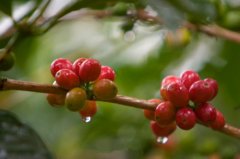
Understand that coffee trees are evergreen shrubs or trees belonging to Rubiaceae.
1 Coffee trees are evergreen shrubs or trees belonging to the Rubiaceae; wild coffee trees can grow to a height of 5 to 10 meters, but coffee trees planted in the manor are often cut to a height of less than 2 meters in order to increase fruit and facilitate harvesting. The opposite leaf of the coffee tree is long oval, the leaf surface is smooth, the end branch is very long, the branch is few, and the flower is white, opening on the petiole.

Coffee trees are evergreen shrubs or trees belonging to Rubiaceae.
Coffee trees are evergreen shrubs or trees belonging to the Rubiaceae family. Wild coffee trees can grow to a height of 5 to 10 meters, but coffee trees planted in the manor are often cut to a height of less than 2 meters in order to increase fruit and facilitate harvesting. The opposite leaf of the coffee tree is long oval, the leaf surface is smooth, the end branch is very long, the branch is few, and the flower is white, opening at the base of the petiole connecting the branch.

Basic knowledge of boutique coffee varieties of coffee trees
Coffee is a perennial evergreen shrub or small tree of Rubiaceae. It is a horticultural perennial cash crop with the characteristics of fast growth, high yield, high value and wide market. Wild coffee trees can grow to a height of 5 to 10 meters, but coffee trees planted on the manor are often cut to less than 2 meters in order to increase their fruit and facilitate harvesting. The opposite leaves of coffee trees are long oval.

Introduction of Chinese fine coffee beans; Variety characteristics of Yunnan small coffee
Coffee is rich in protein, fat, sucrose and starch, caffeine and other substances, made of beverage aroma rich, delicious taste, rich nutrition, thus becoming the world's three major drinks and tea, cocoa composition, and ranked first. Yunnan coffee is a variation of Arabic original species, after long-term cultivation evolved, generally known as Yunnan coffee, has been more than 100 years
Boutique Coffee basic knowledge Coffee Tree varieties
Coffee is a perennial evergreen shrub or small tree of Rubiaceae. It is a horticultural perennial cash crop with the characteristics of fast growth, high yield, high value and wide market. Wild coffee trees can grow to a height of 5 to 10 meters, but coffee trees planted on the manor are often cut to less than 2 meters in order to increase their fruit and facilitate harvesting. The opposite leaves of coffee trees are long oval.

The basic knowledge of high-quality coffee
Coffee is a perennial evergreen shrub or small tree of Rubiaceae. It is a horticultural perennial cash crop with the characteristics of fast growth, high yield, high value and wide market. Wild coffee trees can grow to a height of 5 to 10 meters, but coffee trees planted on the manor are often cut to less than 2 meters in order to increase their fruit and facilitate harvesting. The opposite leaves of coffee trees are long oval.

The characteristics of Katimo Coffee Cafe Coffee Cafe Coffee Coffee Cafe Coffee Cafe Cafe Coffee Cafe Coffee Coff The taste of Katimo coffee
Professional coffee knowledge exchange more coffee bean information please pay attention to the coffee workshop (Wechat official account cafe_style) Coffee tree is a shrub, botanically it belongs to the Rubiaceae family (Rubiaceae) of the genus Coffea, with more than 6000 species belonging to more than 500 genera. Although 25 to 100 of them have been questioned whether they should be included in the Coffea. Most of the raw beans with economic value belong to C.